In the previous study, Isaiah 30:18-33 tells us of a God who waits to be gracious to his people. He promises to hear their cry, reveal himself, guide them, bless them with abundance, renew creation, heal their wounds, and defeat their enemies. Judah is threatened by Assyria, and the issue at hand is who will Judah turn to for help? What is Judah going to rely on?
We are in a series in the book of Isaiah, and this part of the series is “in God we trust”. In the earlier portions of today’s chapter, we’ve seen how God warned Judah against trusting Egypt, and urging them to trust in him instead. Today in our text we look at God’s surprising response to Judah’s stubbornness despite God’s call to repentance
Who and what do you trust? We all have some sort of standards we apply before we decide that that person or thing is worth putting your trust in. This is because there are consequences of trusting in something/someone.
Today, we will see who Judah trusts in, and the effects of that trust.
Imagine you had a friend who is not walking well with the Lord. What lengths would you go to to help this person see where they are with God? What would you say to them to help them see where they are spiritually?
In our modern age, we will say that we need to be wise, tactful, full of empathy, careful not to offend intentionally and to be tender. How does Isaiah do it? He is a prophet of God who speaks to God’s people with sarcasm and mockery, not afraid to be honest with spiritual truth.
The popular movie, Spiderman, has a famous quote, “great power came with great responsibility". For Israel, God’s covenant people, they received great revelation and promises from Him. These should have been answered with worship and trust. What happens when God’s people fail to trust in His Word but indulge in religious hypocrisy? We find ourselves tonight in a section of Isaiah where God addresses his people’s failure.
What will be the consequences? How will God respond?
Who killed Jesus Christ? This is not a trick question, and it is worth for us to begin this study by thinking about it. The battle in Christianity that drives Jesus to the cross is a fight of hypocrisy. It is not the irreligious who sends Jesus to the cross, but the religious. The church needs to be on guard, not against a world out there, but the empty religion inside that always calls for Jesus’ death.
Stephen Charnock writes about the wisdom of God. Who is the God you worship? Is He this wise?
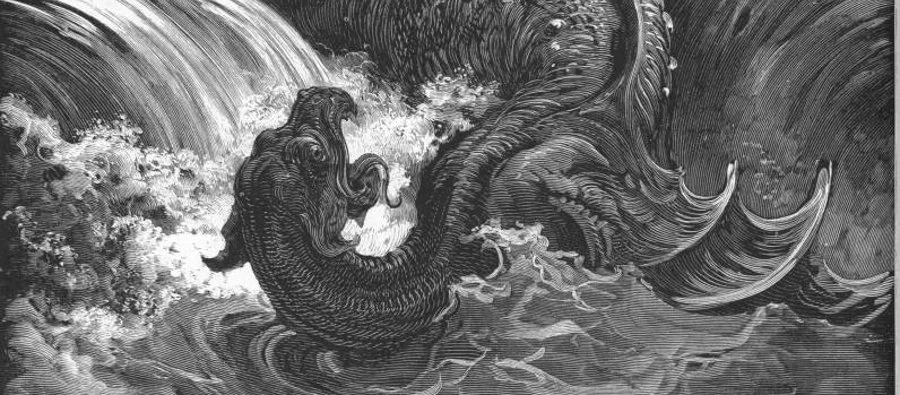
In the last study, we spent our time in Isaiah 27:1 looking forward to the day when God will slay Leviathan, and put to death once and for all sin. Where is human history moving towards?
In this study, we’re going to look at just one verse — Isaiah 27:1. We are going to understand what is the Leviathan and also, what is God going to do.
Singing is more than just singing. It is for the praiseworthy. Do you sing? We are familiar with it when we go to church on Sundays or come together on Wednesdays. But what happens when Monday comes around? What happens when the realities of life hits hard? This matters because it tells us who we are and where we belong to.
In Isaiah 26, God prepares His people to sing a special song.
This chapter comes at the back of Isaiah 24, which was an oracle for the whole world — literally judgement on the whole earth. Now Isaiah 25 is an oracle set against this backdrop, and teaches us what God is like, what His plans are for the world and how we should respond to ongoing developments in this light. Read together, we see clearly God’s plan and promise for the world. Isaiah paints for us a picture of what God will do at the end when He comes again, and it is a wonderful and beautiful thing.
In Isaiah 24, Isaiah is grappling with the challenges of life but he has a different approach from Bart Ehrman. As we work through this chapter together, perhaps, we may be challenged to reevaluate our view of faith and also think about the things we need to do and deal with God to mature our faith past a point of fragility to confidence.
As we’ve been working through this series, we’ve been seeing how God has an opinion about the relationships in our lives. He has an opinion in the sense that He has a clear design for these things that serve His function, which He has designed in His wisdom. In the last of this series, we will look at the covenant of marriage, and the role of singles in God’s kingdom.
In this study, we will be thinking on the topic of children. How should we view children? Are they inherently good or bad? Maybe a good thing to have? Or a burden to avoid? What is the purpose of children in our lives? Are they meant to bring us happiness and joy and some free cuddles maybe? You might be thinking: what does children have to do with our topics of love, relationships, marriage, singlehood, etc. Let us hope to make the connection today.
We’ll consider the issue of purity first by using the life of Joseph, then going to see what the New Testament says!
Relationships fill up so much of our life and energy. But as Christians, how does our faith change our relationships? How does our faith affect how we think about dating, marriage and our singleness?
If you’ve grown up in Christian circles, you’ve probably heard the phrase “don’t be unequally yoked”. The idea of a yoke is agricultural language which we may be unfamiliar with. At the same time, the principle behind it, sometimes reduced to “only date Christians” can sound jarring and even rude.
In this study, we want to understand what it means to be unequally yoked in our relationships, and on the other hand, why it is important to be equally yoked. We want to begin by exploring what it means to be a faithful Christian as this is an important foundation and principle to establish before we go on.
We continue our series that on relationships and we will look at what the Bible says about singles and marrieds in today’s study. We will split 1 Corinthians into two sections, with two underlying arguments. Before we go on, just a note — today’s text is like a tree with many weird branches, and we could be trapped and caught in the branches. But we press on and ask God for His help to understand.
In the previous study, we began our series and tried to lay out the prerequisite to know God’s good design for gender. Genesis 1-2 depicts the male and female as two equal yet distinct holy persons reflecting the image of God. We saw how our anthropology is meant to reflect God. Our genders aren’t just statements in themselves, but is meant to point to God.
In this study, we are going to consider the issue of dating. Now, the Bible doesn’t speak of modern “dating”, because this is a new historical idea. But nevertheless, we can still glean some important and helpful principles from His Word!
This is our new series on the Bible, relationships and love. As young adults, relationships, love and marriage are things that we think or worry about, watch shows about and talk to people about. Today, our culture is obsessed with love and relationships. We see it on social media and in entertainment and as we consume more and more of this content, our view of love and relationships and marriages become shaped more by the world than by God’s Word. This series hopes to tackle this central area of life for young people. We will engage with a variety of issues that single, dating and married people face and we will come out of what the culture tells us to ask, what does God’s Word have to say?
The title of our series comes from a quote from John Calvin which reads: “I have been accustomed to call this book, I think not inappropriately, “An Anatomy of all the Parts of the Soul;” for there is not an emotion of which anyone can be conscious that is not here represented as in a mirror. Or rather, the Holy Spirit has here drawn to the life all the griefs, sorrows, fears, doubts, hopes, cares, perplexities, in short, all the distracting emotions with which the minds of men are wont to be agitated.”
This series has been helping us to see that real human emotions that we struggle with is dealt with in the psalms. Today, we are dealing with a psalm that deals with panic. Panic can be defined as “a sudden overpowering fright” or again “a sudden unreasoning terror often accompanied by mass flight”.